
Biomechanical Assessment
Your feet are the foundations of your skeletal system, and their position and function can have an impact on all the major joints of the body.
What is a Biomechanical Assessment?
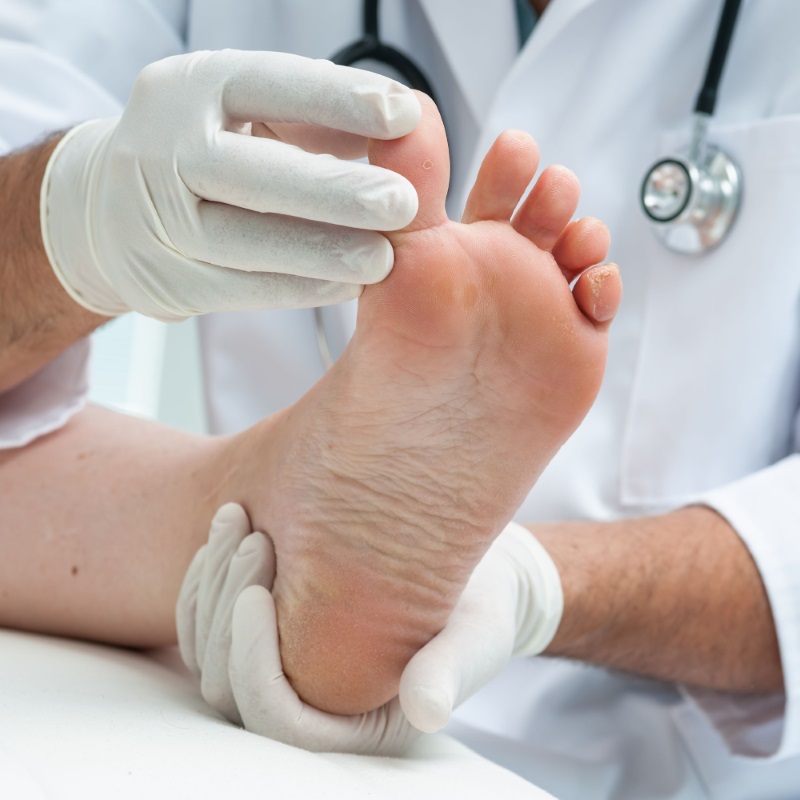
A biomechanical assessment is a detailed clinical examination of how your feet, ankles, and lower limbs move and function when you stand, walk, and load your body.
It is not just a quick look at your feet. It is a structured assessment designed to identify why you are in pain, not just where it hurts.
During your appointment, we assess your posture, joint movement, muscle function, and walking pattern. This allows us to understand how forces are travelling through your foot and lower limb.
This is clinically important because most foot and ankle problems are the result of repeated stress, poor load distribution, or inefficient movement patterns.
Generic insoles or footwear changes often fail because they are not based on your individual mechanics. A biomechanical assessment provides the accuracy needed to guide effective treatment.
Watch what happens at a Biomechanical Assessment
WHY CHOOSE US?

HCPC REGISTERED PODIATRISTS

PRIVATE CONSULTATION

PROFESSIONAL SERVICE

COMPREHENSIVE ASSESSMENT
EVIDENCE BASED TREATMENT
ADVANCED TECHNOLOGY

FULLY INSURED
Do I need a Biomechanical Assessment?
We recommend booking a biomechanical assessment if:
Foot pain is limiting your daily activities or exercise.
Poor foot function is causing ankle, knee, hip or back pain.
You feel you are walking differently or compensating.
You foot problem improves slightly but never fully resolves.
You have repeated injuries or instability.
You have tried insoles, footwear, supports and stretching without success.
What To Expect At Your Biomechanical Assessment
STEP ONE - History

Our MSK practitioner will take a full medical, activity and symptom history to understand why your pain has developed and why it has persisted.
We discuss when your symptoms started, what makes them worse, previous treatments you have tried, your footwear, work demands, exercise and physical activity.
All information is discussed privately and forms the foundation of a precise treatment plan.
STEP TWO - Assessment
There are three elements to a biomechanical assessment.
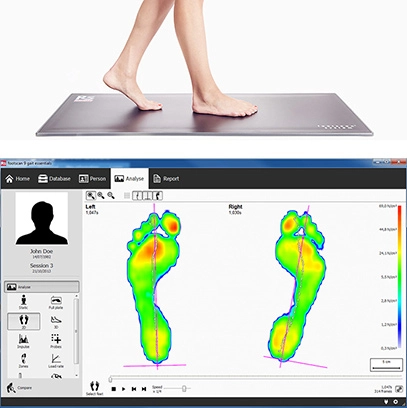
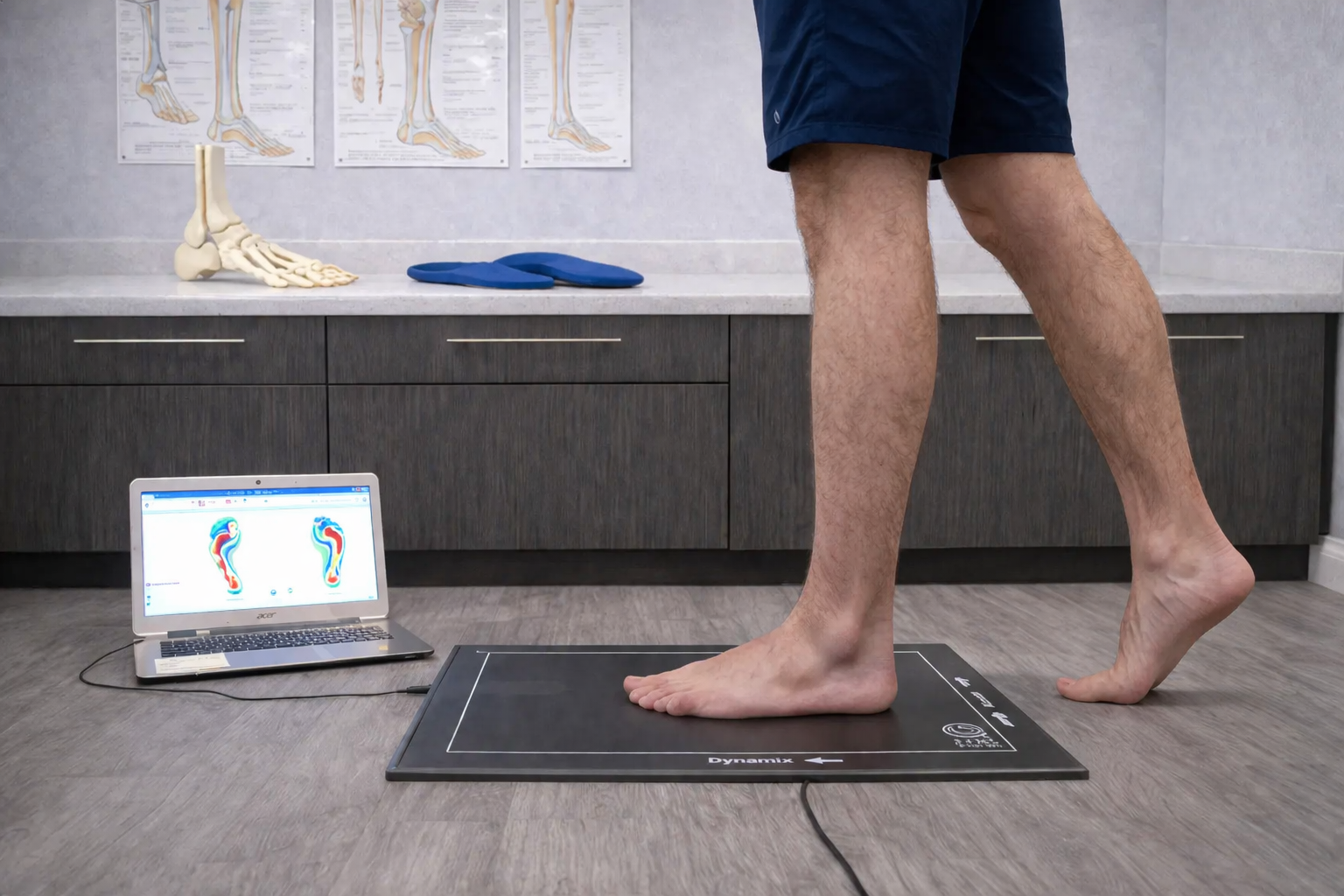
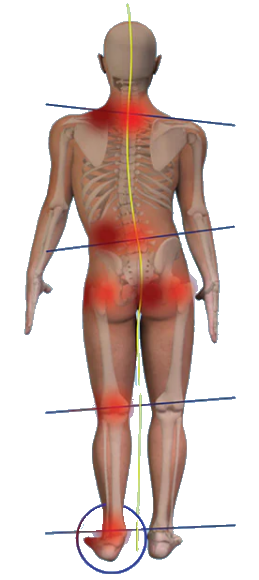
Firstly, we assess the ranges of motion of the main joints of your feet, ankle and lower limbs to assess ‘your normal.’ We then assess your posture to visualise the effect your feet have on your skeletal system when standing.
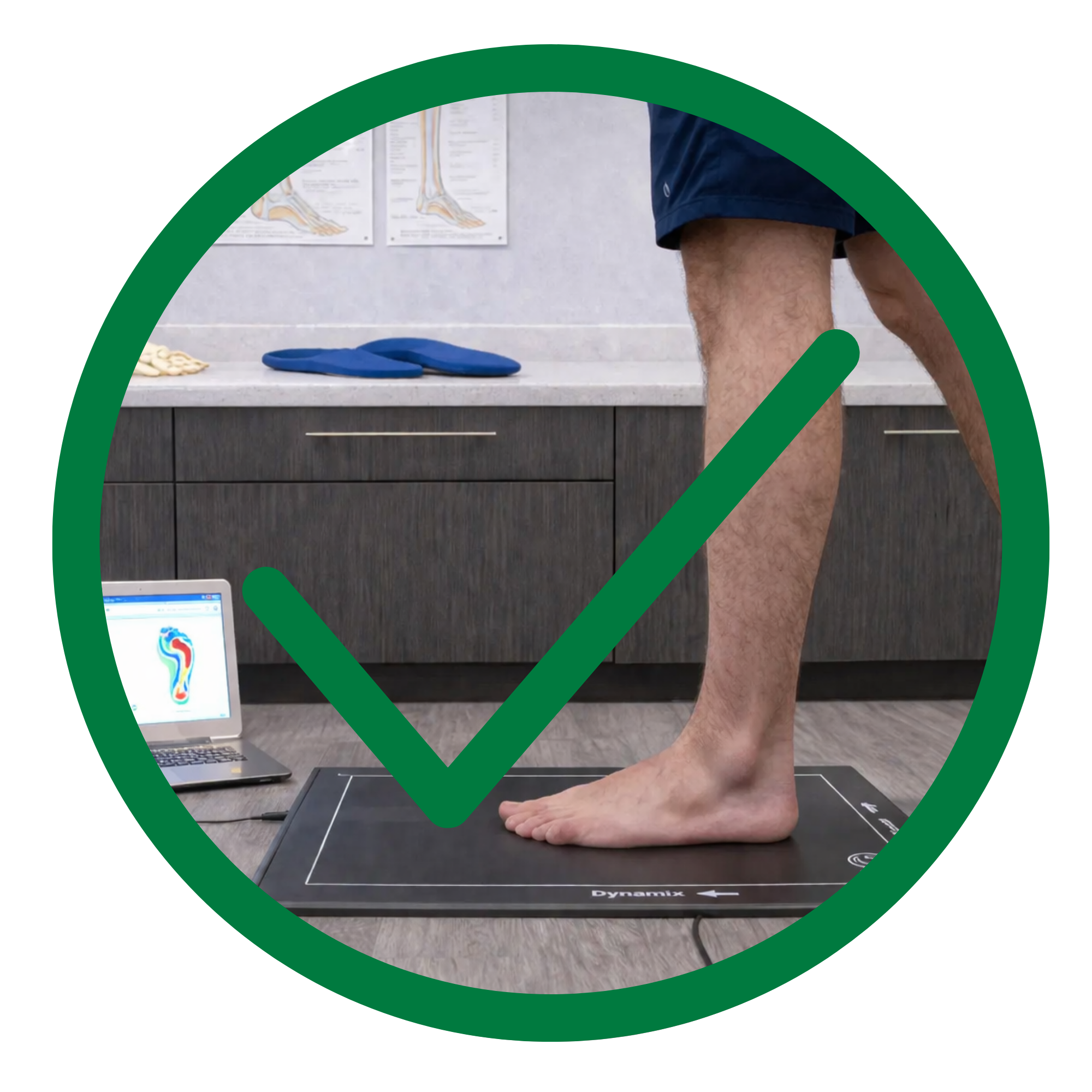
Finally we use 3D Footscan©
technology to analyse your gait (walking / running) and balance.
STEP THREE - Treatment
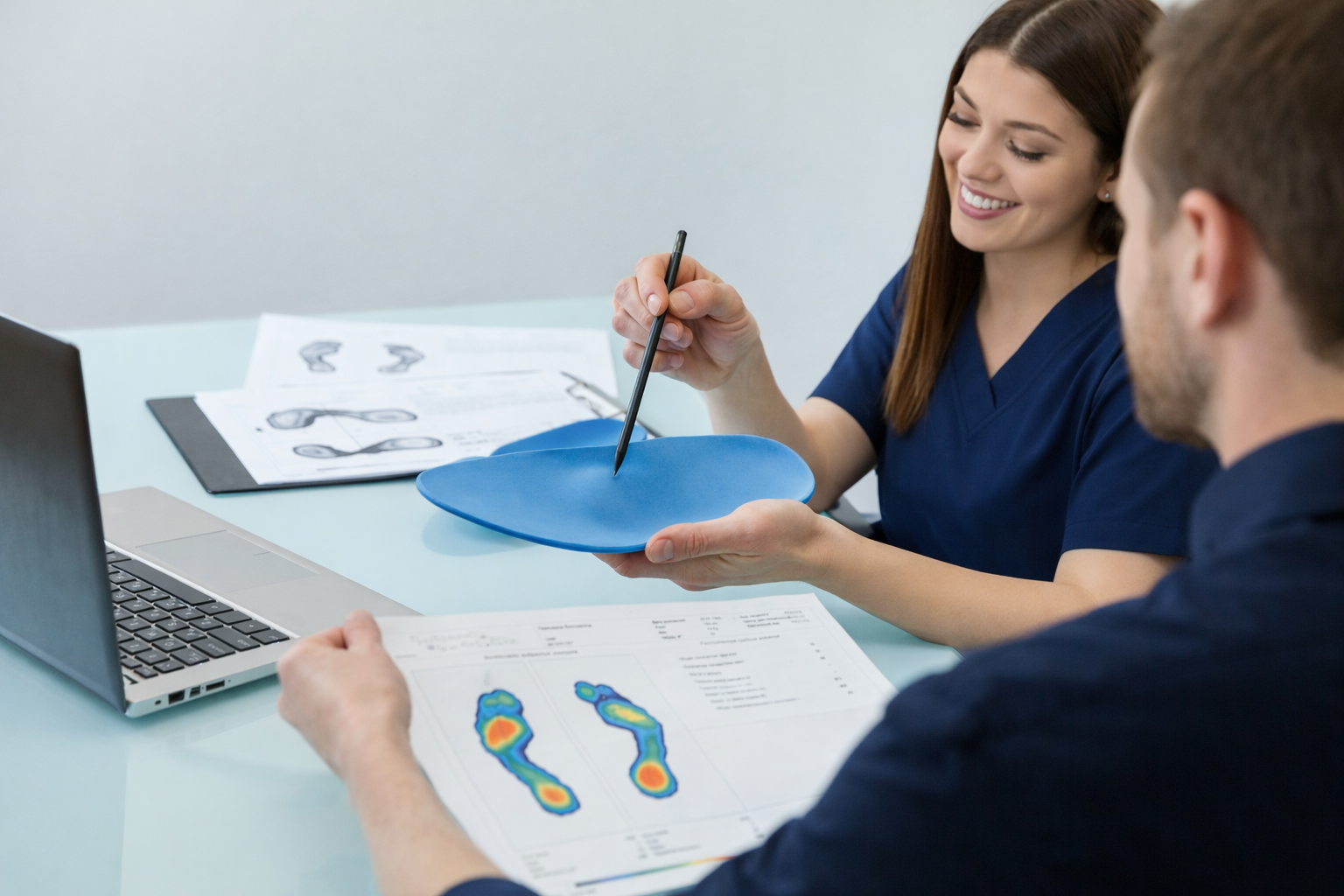
One we have determined the cause of your condition we advise on the most suitable treatment plan to treat the presenting problem and prevent reoccurrence.
Musculoskeletal conditions can be successfully treated by: Modifying lifestyle, sports, footwear; Strengthening & stretching exercises; Orthoses (prescription insoles) that redistribute load and prevent repetitive injury; Shockwave and laser therapy that reduce inflammation and promote healing. We also have pathways for imaging and consultant referrals.
How a Biomechanical Assessment can help with Foot, Ankle, Knee, Hip and Back Pain.
If you are experiencing pain in your foot, ankle, knee, hip, or lower back, it is often a sign that something in your gait (movement) or load pattern is not working as it should.
A biomechanical assessment looks at how your body moves as a whole, identifying where stress is building and why certain tissues are being overloaded.
By understanding how your feet interact with the ground and how this affects the rest of your body, we can pinpoint the root cause of your symptoms and guide the right treatment to restore comfortable, efficient movement.
Common conditions identified through a biomechanical assessment include:
Plantar fasciitis (heel pain)
Achilles tendinopathy
Tibialis posterior dysfunction
Flat feet (overpronation)
High arches (poor shock absorption)
Metatarsalgia (pain in the ball of the foot)
Morton’s neuroma
Hallux valgus (bunions)
Hallux limitus / rigidus (stiff big toe)
Recurrent ankle sprains and instability
Peroneal tendon dysfunction
Shin splints (medial tibial stress syndrome)
Patellofemoral knee pain
Iliotibial (IT) band syndrome
Hip pain related to altered gait
Lower back pain linked to poor lower limb mechanics
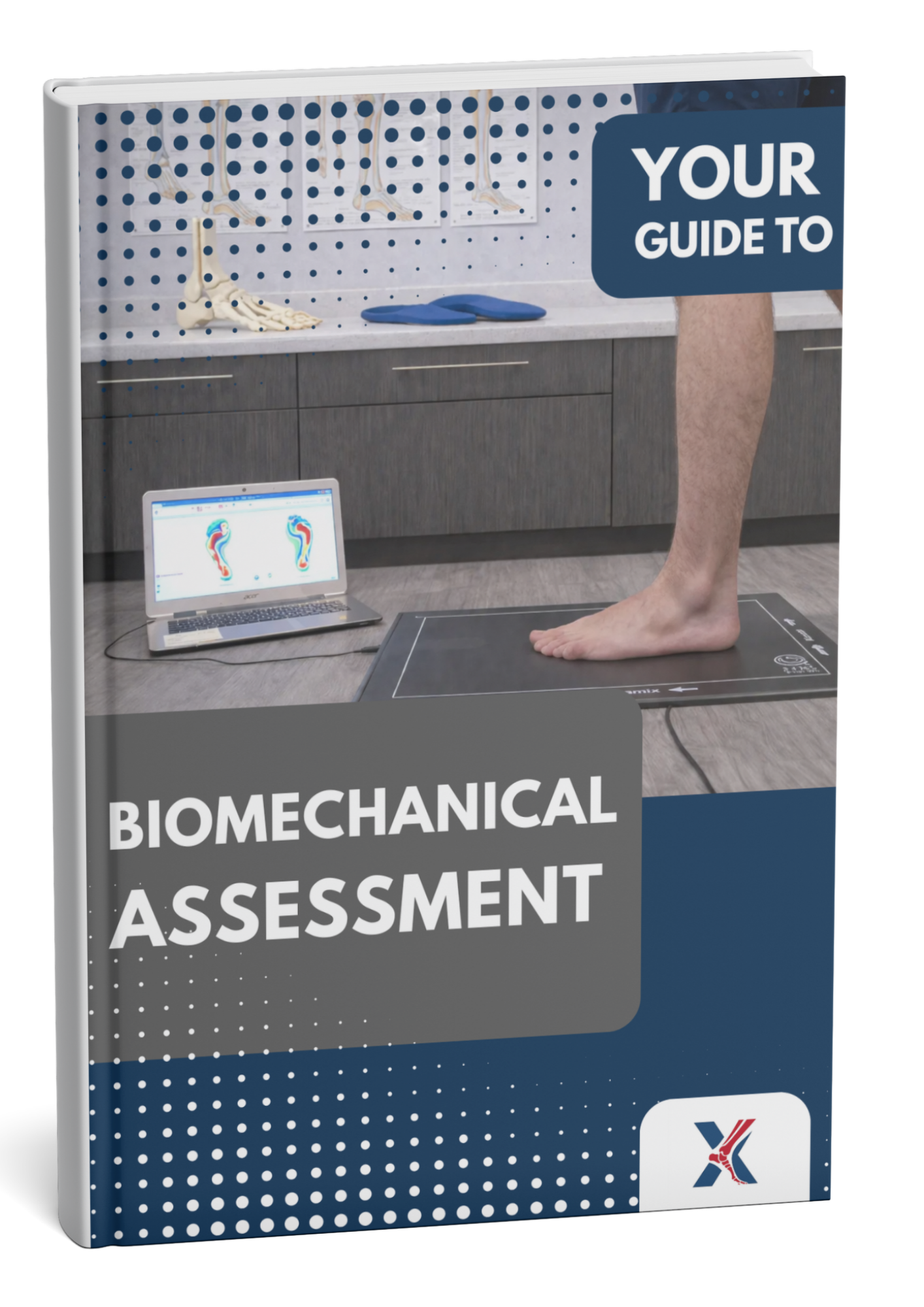
Download our free Guide to
Biomechanical Assessments
We have created a clear and practical guide to Biomechanical Assessments. Developed by musculoskeletal (MSK) podiatrists it explains how poor biomechanics can cause foot, ankle, knee, hip and back pain. And most importantly how these symptoms can be successfully treated.
When a Biomechanical Assessment is Recommended
You should consider a biomechanical assessment if:
Your foot or ankle pain has not improved with rest or basic treatment
Your symptoms keep returning
You are limping or changing how you walk
You feel unstable or unbalanced on your feet
You are avoiding activity because of pain
You have been advised to consider orthotics
You want to understand the cause of your problem, not just manage symptoms
Early assessment often leads to faster recovery and prevents problems from becoming long-term.
If you have questions about our biomechanical assessments, contact us on 028 9278 9105
FOR APPOINTMENTS
Call 028 9278 9105
Or Book Online At Anytime ⤦
Frequently Asked Questions
How much does treatment cost?
For up-to-date fees, please view our fees page or contact the clinic on 028 9278 9105
Will I need more than one appointment?
No. Our practitioners will carry out a full assessment in one appointment. If biomechanical assessment highlights the need for further investigation such as a gait scan, imaging or a referral - you will be advised this at the conclusion of the appointment.
How long is a biomechanical assessment?
We generally allow for 1 to 1:30 hours so we can complete all of the tests to complete the assessment.
Is a biomechanical assessment painful?
No, none of the tests we do are painful. If you are presenting in pain we may need to palpate or mobilise the painful area to assess the case of the problem but this is aways done with care an cosideration.
What should I wear to the appointment?
We advise that you attend in loose legged or 'gym-style' clothing so we can see your body shape below the knee and below.
Should I bring anything to the appointment?
Yes. Please bring the footwear you wear most often, including any shoes you use for walking, work, or exercise. Also if you have any previous reports, scans, or imaging related to your problem, please bring these with you.
Will I get a diagnosis at the appointment?
Yes in most cases we will be able to give you a diagnosis of the condition or conditions we believe is causing the symptom(s). In some cases we may need to refer for imaging (Xray, ultrasound or MRI) if we believe the condition / symptoms warrant further investigation.
Do you also provide treatment?
Yes. The purpose of biomechanical assessment is to determine the cause of the problem. When we know the cause we can provide Strengthening & stretching exercises, Orthoses (prescription insoles) that redistribute load and prevent repetitive injury, Shockwave and laser therapy that reduce inflammation and promote healing, Rehab exercises and / or lifestyle, sports, footwear modifications.
testimonials

What patients say about us...


© 2026 Foot Medic™ Royal Hillsborough
We run on